
Monday, October 19, 2026

The 60-40 portfolio, which for a long time has been a “set it and forget it” way to generate long-term wealth, is kind of dead. Well, the 40 side of it is hurting at least.
Traditionally, a “60-40” investment portfolio has 60% of its holdings in stocks and the remaining 40% in bonds. The thinking goes that when stocks fall, the bonds cushion the fall.
However, bonds have been a terrible investment since the depths of the COVID-19 crisis in early 2020, when interest rates hit a generational low. Remember, bond prices move inversely to yields – when yields rise, prices fall. Yields have rallied strongly since, which has crushed bonds, especially long-term bonds.
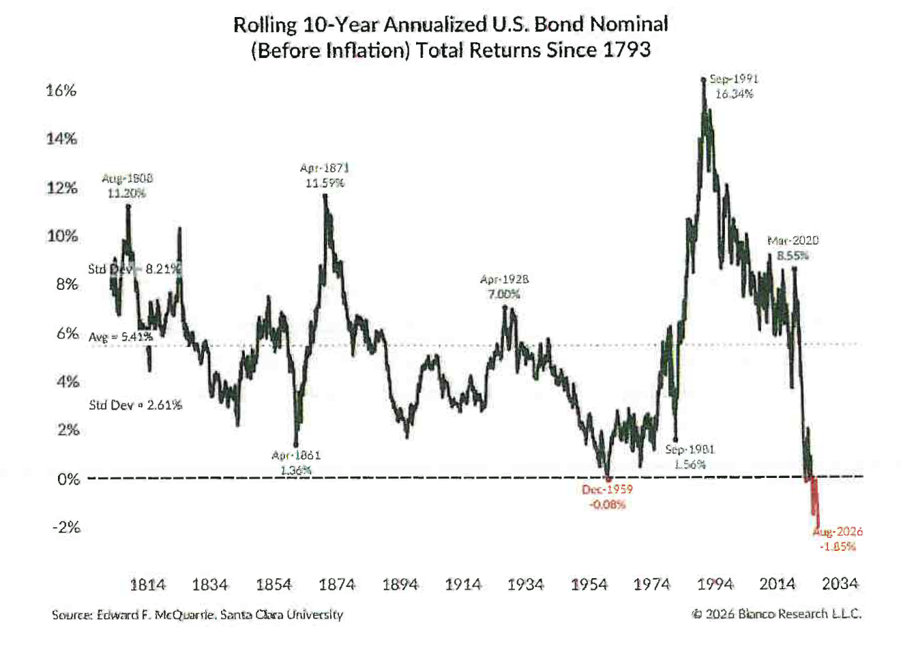
In fact, U.S. bonds produced negative returns over the past 10 years, even before factoring in inflation. It’s only the second time this has happened in the past 233 years:
I don’t speculate on interest rates. But I can see unsustainably low rates when they’re staring at me.
Perhaps that explains their quick rise. In five years, 10-year Treasurys have gone from 1.4% to nearly 5%. The 30-year Treasury has gone from 1.9% to 5.3%.
Bonds are again paying a respectable yield. But it’s still far below levels reached during the inflationary 1980s.
That’s why it’s not a bad idea to hold cash today.
Retirees who are financially secure can dial back portfolio risk with cash, negating whatever the stock market does. Also, having cash on hand provides some dry powder to take advantage of great opportunities when they occur.
Daniel A. White is an investment advisory representative of and provides advisory services through CoreCap Advisors, LLC. Daniel A. White & Associates and CoreCap Advisors are separate and unaffiliated entities.