
Monday, September 28, 2026
Over the years, stock dividends seem to have taken a back seat to other forms of returning capital to shareholders, like buybacks. Well on top of that, now stock dividends can no longer compete with Treasury bonds.
In July 2016, 63.4% of S&P 500 companies paid a dividend yield above the 10-year Treasury note. That means a shareholder collected more annual income per dollar invested in the S&P 500 than what a government bond paid. That was the highest level since the data began in 1972, excluding the brief COVID crash.
From the 2016 figure of 63.4%, fast forward 10 years to today and the rate of S&P 500 companies paying a dividend greater than the 10-year Treasury is just 3.85%. It’s the lowest reading since May 2007.
Just 19 companies in the S&P 500 pay a dividend yield higher than a Treasury. Interestingly, both sides of the equation moved.
The 10-year Treasury yield finished July at 4.75% versus 1.46% a decade earlier. At the same time, the S&P 500’s dividend yield was cut roughly in half to about 1%. This happened as the index’s weight shifted toward technology companies that return cash through buybacks or not at all.
JPMorgan forecasts $1.9 trillion in global buybacks for all of 2025. Regardless of where the final tally falls, it’s clear buybacks have increased since the early 2000s:
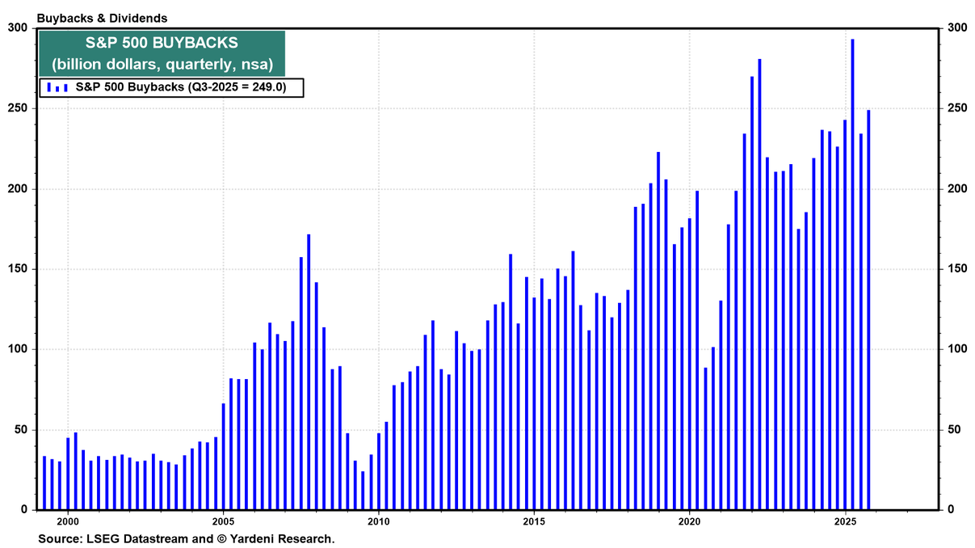
The trends indicate dividends have given way to buybacks as the preferred method for companies to return cash to shareholders. Perhaps the situation will flip in the future. But for now, a dividend just isn’t what it used to be.
Daniel A. White is an investment advisory representative of and provides advisory services through CoreCap Advisors, LLC. Daniel A. White & Associates and CoreCap Advisors are separate and unaffiliated entities.