The Retirement Countdown Is On—Now What?
For most Americans, turning 73 used to be a milestone of celebration and reflection. But for retirees with substantial savings in tax-deferred accounts like IRAs and 401(k)s, that birthday now comes with a less-celebrated obligation: Required Minimum Distributions, or RMDs.
The IRS mandates that, starting at age 73, you must begin withdrawing a portion of your retirement savings every year—whether you need the income or not. And yes, those distributions are fully taxable.
But here’s the good news: there are legal, strategic ways to avoid or significantly reduce your RMDs. And doing so could save you thousands in taxes, help you pass more wealth to loved ones, and give you more control over your financial future.
In this guide, we’ll explore powerful strategies to avoid RMDs altogether—or at least minimize their impact. We’ll break them down in plain English, and walk you through real-life case studies so you can see exactly how these strategies work in action.


What Are RMDs and Why Should You Care?
Required Minimum Distributions (RMDs) are the IRS’s way of eventually taxing the money you’ve saved in pre-tax retirement accounts like Traditional IRAs, 401(k)s, and 403(b)s. Once you hit age 73 (for those born between 1951–1959), the government requires you to start taking withdrawals each year, calculated based on your life expectancy and account balance.
Why does this matter?
-
RMDs are fully taxable at your ordinary income rate, which could be higher than you think.
-
They can push you into a higher tax bracket.
-
They can increase your Medicare premiums through IRMAA surcharges.
-
They can reduce Social Security efficiency by increasing the portion subject to tax.
-
And finally, RMDs can force you to withdraw money you don’t even need.
If you’re looking to preserve wealth, reduce taxes, or leave a legacy, RMDs can become a major financial hurdle.
Who’s Most at Risk?
While RMDs affect all IRA holders, the impact can be especially severe for:
-
High-net-worth retirees with large tax-deferred balances
-
Professionals and business owners who’ve saved aggressively in pre-tax plans
-
Widows or single retirees who are now filing as individuals and face higher brackets
-
Those with multiple income sources, such as pensions and Social Security
Case Study #1: “The Accidental Millionaire”
Janice, a 72-year-old retired pharmacist, has $1.3 million in her Traditional IRA and is living comfortably on Social Security and a modest pension. She doesn’t need IRA withdrawals yet. But next year, she’ll be forced to take a $50,000 RMD—pushing her into a higher tax bracket, increasing her Medicare Part B premiums, and triggering taxes on 85% of her Social Security income.
Her “success” in saving could lead to a tax snowball. But with the right strategy, that outcome can be changed.


Strategy 1: The Roth Conversion Ladder
One way to eliminate future RMDs is through Roth IRA conversions. Roth IRAs do not have RMDs during your lifetime, and qualified withdrawals are 100% tax-free.
How It Works
You voluntarily move a portion of your Traditional IRA into a Roth IRA and pay taxes on the conversion now—ideally at a lower rate than you’d face in the future.
Benefits
-
Avoid future RMDs completely
-
Lock in today’s lower tax rates
-
Leave tax-free assets to heirs
Key Considerations
-
Roth conversions increase your taxable income in the year you convert
-
You need to plan carefully to avoid pushing yourself into a higher bracket
Case Study #2: “Strategic Sharon”
Sharon, age 65, worked with her advisor to start converting $50,000 per year from her Traditional IRA to a Roth IRA between retirement and age 73. Over 8 years, she shifted $400,000 into Roth accounts. Her future RMDs are now a fraction of what they would’ve been, and she has a growing pool of tax-free assets.
Strategy 2: Qualified Charitable Distributions (QCDs)
For charitably inclined retirees, Qualified Charitable Distributions are a way to satisfy RMD requirements without paying taxes.
How It Works
After age 70½, you can direct up to $100,000 per year from your IRA to a qualified charity. The distribution does not count as taxable income, but it does count toward your RMD.
Benefits
-
Lower taxable income
-
Reduce Medicare premiums and Social Security taxation
-
Support causes you care about
Case Study #3: “Giving Grace”
Grace, age 75, donates $15,000 annually to her church. Rather than writing a check from her bank account, she directs the donation from her IRA as a QCD. She satisfies her $15,000 RMD and pays zero tax on the withdrawal—saving over $3,500 in taxes annually.


Strategy 3: Delay Retirement Account Growth
It may sound strange, but sometimes it pays to slow the growth of your IRA—especially if you have other assets growing tax-efficiently.
Ways to do this:
-
Invest more conservatively inside your Traditional IRA
-
Use growth investments in your Roth accounts or taxable brokerage
This strategy can reduce the size of your RMDs, and be part of an overall tax-smart asset location strategy.
Strategy 4: Consider the Qualified Longevity Annuity Contract (QLAC)
A QLAC is a special type of deferred annuity that allows you to exclude up to $200,000 from your IRA RMD calculations.
How It Works
You invest a portion of your IRA in a QLAC. Payments start at a later age (e.g., 80–85), and the invested amount does not count toward your IRA balance for RMDs until payouts begin.
Benefits
-
Lower RMDs between ages 73 and 85
-
Guaranteed lifetime income later in life
-
Tax deferral on a portion of your IRA
Case Study #4: “Late-Life Larry”
Larry invested $150,000 of his IRA into a QLAC at age 70. When he turned 73, his RMDs were lower than expected—freeing up thousands in taxes and allowing his other assets to continue growing. At 85, the QLAC began paying out guaranteed income for life.

Advanced Planning: The Benefit of an Advisor
Avoiding RMDs isn’t just about reducing taxes—it’s about taking control of your retirement destiny. But with tax laws constantly changing, one-size-fits-all advice doesn’t cut it.
An advisor can:
-
Run custom RMD projections
-
Model Roth conversion scenarios
-
Build personalized withdrawal strategies
-
Coordinate with your CPA for tax efficiency
-
Help you build a legacy with confidence
Case Study #5: “Coordinated Carla”
Carla met with her advisor at Dan White & Associates five years before RMDs began. Together, they built a proactive plan combining QCDs, Roth conversions, and conservative IRA allocation. When she turned 73, Carla owed almost no tax on her required distributions. Her plan worked exactly as intended.
Your Retirement Partner
Since 1987
Ready when you are…
RMDs don’t have to control your retirement. With thoughtful planning, you can reduce—or even eliminate—their impact and keep more of your hard-earned money.
Whether you’re approaching age 73, in retirement, or helping a spouse or parent navigate their options, it’s never too late—or too early—to put a plan in place.
Let’s talk about your unique situation.
At Dan White & Associates, we help people just like you build smart, tax-efficient retirement strategies designed to protect what you’ve earned and maximize what you leave behind.
📞 Call us today at 610-358-8942 or schedule your complimentary consultation below!
About DWA
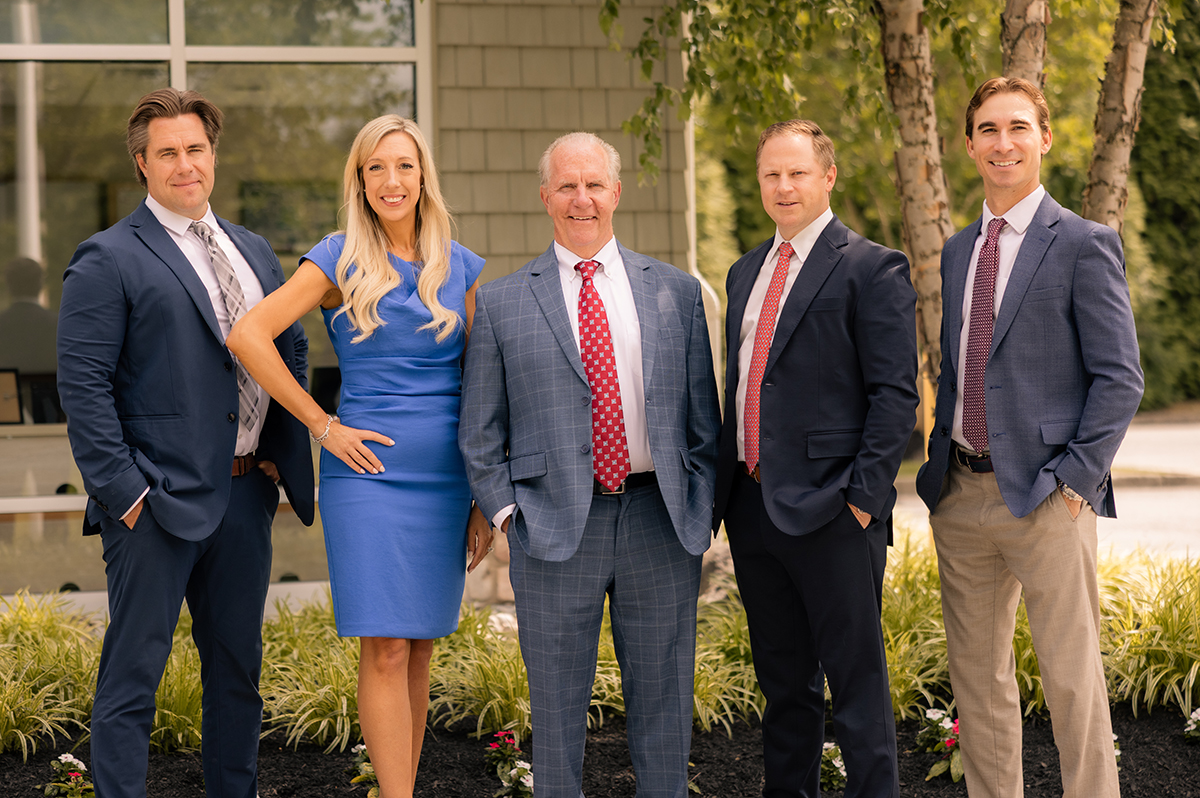
Dan White & Associates was founded in 1987, specializing in retirement and financial planning. We focus on addressing the distinctive financial needs of those nearing retirement and those who have already retired. Today, Dan White & Associates houses five financial professionals between our three offices located in Glen Mills, PA, Middletown, DE, and Lewes, DE. Within our offices, we proudly service over two thousand clients in the region.
Our main priority is getting a clear understanding of each client’s unique situation, by using a comprehensive questionnaire to aid us. Having full knowledge of our client’s situation ensures that we can better inform them about all of the possible financial strategies available to them. Next, we construct a plan together that will give our clients a clear path toward a safe and secure retirement. At our firm, we take a different approach than most advisors by priding ourselves in the educational aspect of retirement planning.
Find out how we can educate you and help make you more confident when it comes to making retirement decisions!